If you’ve ordered food online in the last few years—and let’s be honest, most of us have more times than we’d like to admit—you’ve probably eaten from a cloud kitchen without even realizing it. No storefront, no visible signboard, just a name on an app and a delivery guy at your door.
For a while, cloud kitchens felt like the future of food. Lower costs, flexible menus, no expensive dining space. It all sounded… smart. Almost too smart.
But now that the initial hype has settled a bit, the question has shifted from “What is this model?” to something more grounded: is it still actually working?
What Makes a Cloud Kitchen Different
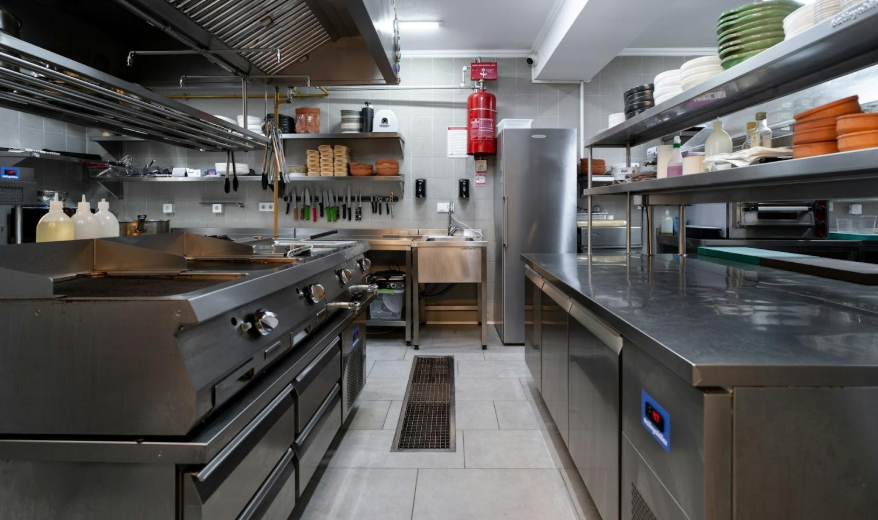
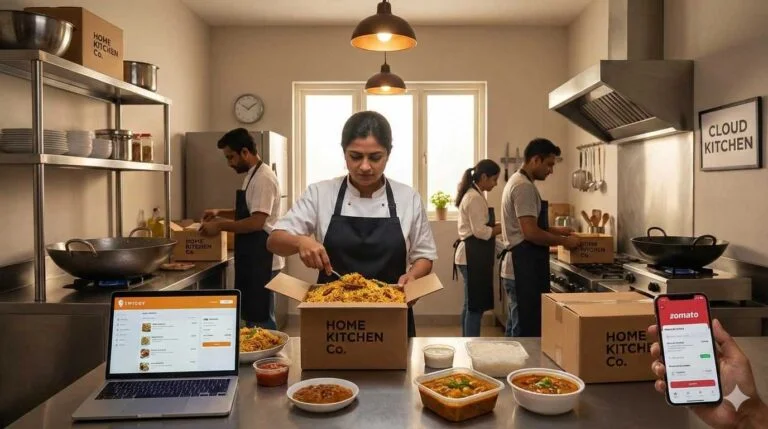
At its simplest, a cloud kitchen (or ghost kitchen) is a delivery-only food business. No dine-in customers, no waitstaff, no fancy interiors. Just a kitchen optimized for online orders.
That alone changes everything.
You don’t need to spend lakhs on décor or high-footfall locations. Instead, you focus on efficiency—faster cooking times, streamlined menus, and tight operations. It’s less about ambiance, more about execution.
And for many entrepreneurs, especially first-time founders, that lower entry barrier has been a big draw.
The Real Cost Advantage (And Its Limits)
On paper, the economics still look attractive.
Rent is lower because you can operate in less expensive areas. Staff requirements are minimal. You can even run multiple brands from the same kitchen, targeting different cuisines or audiences.
But here’s where things get a bit tricky.
Delivery platforms take a significant commission—sometimes up to 20–30%. Add to that packaging costs, marketing spend to stay visible on apps, and fluctuating ingredient prices… and suddenly, margins don’t look as comfortable.
It’s not that the model is broken. It’s just not as effortless as it once seemed.
The Question Everyone’s Asking
Naturally, this leads to the big question: Cloud kitchens ka business model 2026 me kitna profitable h?
The honest answer? It depends—a lot.
A well-managed cloud kitchen with a clear niche, strong branding, and efficient operations can still be quite profitable. But a generic setup, without differentiation or control over costs, might struggle to stay afloat.
In other words, the model works—but only if the execution is sharp.
The Power of Niche and Branding
One of the biggest shifts in recent years has been the move toward niche concepts.
Instead of offering everything from North Indian to Chinese to pizza, successful cloud kitchens are narrowing their focus. A brand that does just gourmet burgers. Or regional thalis. Or healthy meal bowls for working professionals.
This clarity helps in multiple ways. It simplifies operations, reduces ingredient waste, and makes marketing more targeted.
And in a crowded app marketplace, being memorable matters more than ever.
Technology as a Backbone
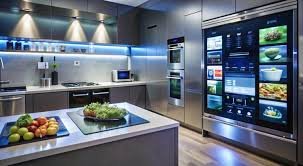
Cloud kitchens rely heavily on technology—not just for orders, but for the entire workflow.
Inventory management, order tracking, customer feedback, data analytics—it’s all interconnected. Smart operators use this data to tweak menus, adjust pricing, and even predict demand patterns.
For example, noticing that biryani orders spike on weekends or that certain combos perform better during lunch hours can lead to small but meaningful optimizations.
It’s not glamorous, but it’s effective.
Challenges That Don’t Go Away
Despite its advantages, the cloud kitchen model comes with its own set of challenges.
Customer loyalty is fragile. With so many options available on delivery apps, people switch brands easily. One bad experience—late delivery, poor packaging, inconsistent taste—and you might lose a customer for good.
There’s also the issue of visibility. Standing out on platforms like Zomato or Swiggy often requires paid promotions, which eats into margins.
And then there’s the human side. Managing kitchen staff, maintaining quality, handling peak-hour pressure—it’s still a demanding business, even without a dining area.
Is It Still a Good Entry Point for Entrepreneurs?
For someone looking to enter the food business, cloud kitchens still offer a relatively accessible starting point.
You can test ideas without committing to a full-fledged restaurant. Experiment with menus, pricing, branding. If something works, you scale it. If it doesn’t, you pivot.
That flexibility is valuable, especially in a market that changes as quickly as India’s.
But it’s important to go in with realistic expectations. This isn’t passive income. It requires attention, adaptability, and a willingness to learn from mistakes.
The Future: Hybrid Models and Evolution
Interestingly, many successful cloud kitchen brands are now moving toward hybrid models.
Starting online, building a loyal customer base, and then opening small dine-in spaces or takeaway outlets. It’s a way to diversify revenue and strengthen brand identity.
At the same time, traditional restaurants are adopting cloud kitchen strategies—launching delivery-only brands from their existing kitchens.
The lines are blurring.
A Business That Rewards Thoughtfulness
In the end, cloud kitchens in 2026 aren’t about quick wins. They’re about thoughtful execution.
Understanding your audience. Managing costs carefully. Delivering consistent quality. Building a brand that people remember—not just for one order, but for the next one too.
It’s not as easy as it once looked. But then again, most worthwhile things aren’t.
And maybe that’s what makes the model still relevant—not because it’s effortless, but because it’s adaptable.