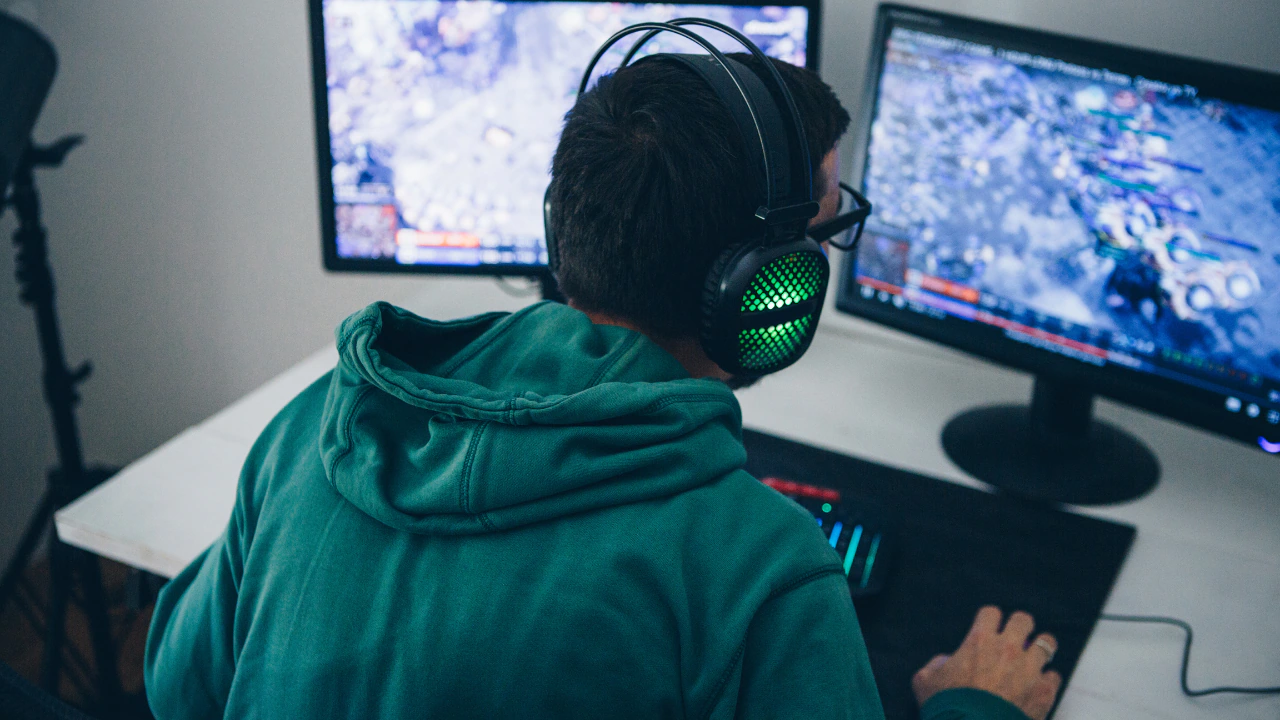

There was a time—not too long ago—when gaming was seen as a distraction. Something you did to unwind after work or maybe procrastinate a little. Fast forward to today, and the narrative has flipped in a strange, fascinating way. Now people aren’t just playing for fun… they’re playing to earn.
Sounds almost too good, right? Spend time in a game, complete tasks, win tokens or rewards, and convert that into real money. It’s a model that caught global attention during the pandemic, and India, with its massive young population and growing gaming culture, didn’t take long to join in.
But once the excitement settles, a more grounded question starts to emerge.
What Exactly Is “Play-to-Earn”?
Play-to-earn (P2E) games are built around the idea that players can earn real-world value—usually through in-game tokens, NFTs, or digital assets. These can sometimes be traded or sold outside the game.
Unlike traditional games where rewards stay inside the ecosystem, P2E tries to blur that line. Your time, your effort, your in-game progress… all potentially convertible into money.
At least, that’s the promise.
Why It Took Off in India
India was, in many ways, the perfect ground for this concept to grow.
Affordable smartphones, cheaper internet, and a massive base of young users already comfortable with mobile gaming. Add to that the rising interest in crypto and digital assets, and suddenly the idea of “earning while playing” didn’t feel so far-fetched.
For some, especially in smaller towns, it even felt like an opportunity. A new kind of side income that didn’t require formal qualifications or a traditional job setup.
And that’s where things get interesting.
The Question That Everyone Eventually Asks
After the initial excitement, reality starts to creep in. People begin to wonder: Play-to-earn games India me sustainable income source ban sakte h kya?
It’s not an easy yes or no.
There have been cases where players earned decent amounts, especially early adopters in certain games. But sustainability is a different story altogether. Most P2E ecosystems rely heavily on new users entering the system. When growth slows, rewards often shrink.
It’s a bit like a cycle—and not always a stable one.
The Economics Behind the Screen
Here’s something people don’t always talk about: P2E games are still businesses.
They need revenue to keep rewards flowing. This often comes from new players buying in-game assets or tokens. So, if fewer people join or invest, the entire reward structure can weaken.
In some cases, the earnings you see advertised are based on peak periods, not the long-term average. And that can be misleading.
It’s not that earning is impossible—it’s just… inconsistent.
Skill vs. System
Another layer to this is the role of skill.
In traditional competitive gaming, skill can give you a clear edge. But in many P2E games, earnings are influenced more by the game’s economy than by how good you are.
You might spend hours playing, only to find that the value of your rewards has dropped because of market changes. That disconnect can be frustrating.
It shifts the focus from “how well you play” to “how the system behaves.”
Regulatory and Practical Challenges
In India, there’s also a layer of uncertainty around regulation.
Crypto-related earnings, taxation, legal clarity—it’s all still evolving. For someone hoping to rely on P2E as a steady income source, that uncertainty can be a risk.
There are also practical concerns. Not all games are transparent. Some projects shut down unexpectedly. Others change reward structures without much notice.
For a space that promises financial opportunity, stability is still catching up.
Where It Still Makes Sense
That said, play-to-earn isn’t entirely without merit.
As a side activity? Sure, it can work. If you enjoy gaming anyway, earning a bit on the side can feel like a bonus. Some players treat it like a hobby that occasionally pays, rather than a job.
There’s also potential in the long term if the ecosystem matures—more balanced economies, better regulation, and games that prioritize gameplay alongside rewards.
But we’re not quite there yet.
A More Grounded Way to Look at It
Maybe the key is to approach P2E with the right mindset.
Not as a guaranteed income stream, but as an experimental space. Something to explore, understand, and engage with carefully. Keep expectations realistic, avoid heavy upfront investments, and stay aware of how quickly things can change.
Because in its current form, the model still feels… a bit fragile.
The Future Isn’t Just About Earning
What’s interesting is that the gaming industry itself is evolving beyond just the “earn” aspect.
Community, storytelling, competitive play—these elements are still at the heart of gaming. P2E is just one layer added on top. And if that layer becomes too dominant, it can sometimes take away from what made gaming enjoyable in the first place.
Finding that balance will be crucial.
A Thought That Stays
So, can play-to-earn games become a sustainable income source in India?
Maybe for a few. Maybe for short periods. But for most people, at least right now, it’s not something to rely on fully.
And that’s okay.
Because sometimes, the value of something isn’t just in what it pays—but in what it teaches. And P2E, with all its ups and downs, is definitely teaching a generation something new about digital economies, risk, and opportunity.
Not perfectly. But enough to keep the conversation going.