
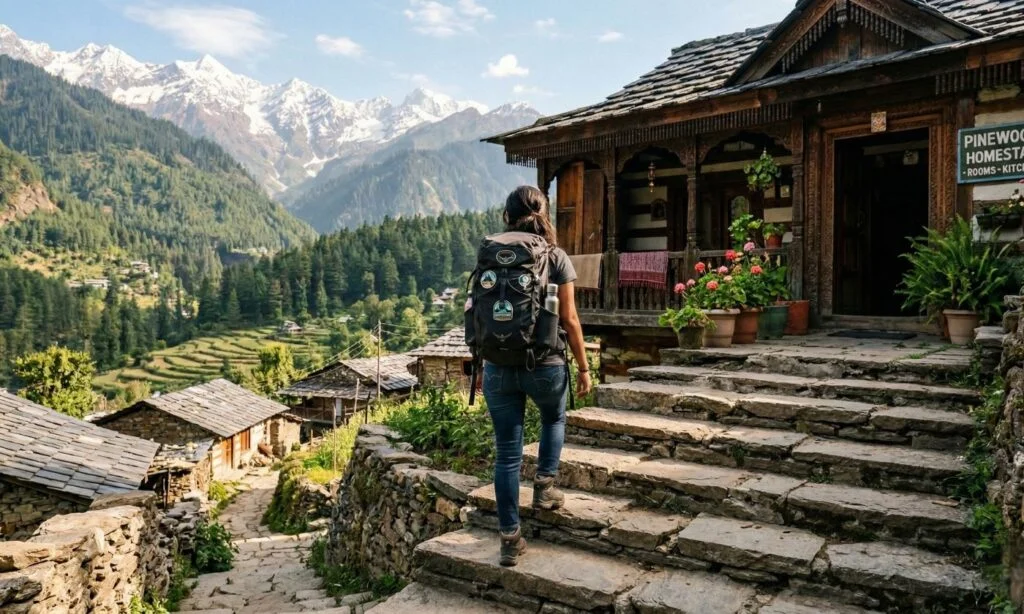
Travel used to be simpler, in a way. You picked a destination, visited the famous spots, clicked the expected photos, and came back with a checklist proudly completed. It wasn’t wrong — just… predictable.
But lately, something has shifted. People aren’t just asking “Where should I go?” anymore. They’re asking, “What does it feel like to be there?”
That’s where hyperlocal travel quietly steps in. Not as a loud trend, but as a different way of seeing the same world.
What Does “Hyperlocal” Really Mean?
It’s a word that gets thrown around a lot, but at its core, hyperlocal travel is about going deeper instead of wider.
Instead of hopping between ten tourist attractions, you spend time in one place — maybe a neighborhood, maybe a small village. You eat what locals eat, follow their routines, notice details that don’t show up in guidebooks.
It’s less about sightseeing and more about… experiencing.
Sometimes that means waking up early to join a local market run. Other times, it’s sitting in a small café, listening to conversations you barely understand but somehow still enjoy.
Why Travelers Are Moving Away from “Typical” Trips
Let’s be honest — mainstream tourism can feel a bit repetitive after a while.
The same crowded spots. The same curated experiences. The same photos everyone else has.
Hyperlocal travel offers something different. It feels more personal, less staged. There’s a sense of discovery that doesn’t rely on ticking off famous landmarks.
And in a world where everything is documented online, finding something that feels “untouched” — even in a small way — becomes surprisingly valuable.
The Question That’s Driving This Shift
At some point, whether you’re planning a trip or just scrolling through travel content, this thought comes up:
Hyperlocal travel experiences ka trend travelers ko kyun attract kar raha h?
It’s not just about novelty. It’s about connection.
People want to feel like they’ve understood a place, not just visited it. And hyperlocal experiences, when done right, offer that sense of understanding.
The Role of Authenticity
Authenticity is a tricky word. Everyone wants it, but it’s hard to define.
In travel, it often comes down to moments that aren’t scripted. A conversation with a shopkeeper. A meal cooked in someone’s home. A festival you didn’t plan to attend but stumbled upon anyway.
These experiences aren’t polished or perfect. Sometimes they’re a bit messy. But they’re real.
And that realness sticks with you longer than any guided tour.
How Technology Is Enabling This Trend
Interestingly, technology — which often makes travel feel more standardized — is also helping people go hyperlocal.
Apps and platforms now connect travelers with local hosts, guides, and communities. You can book a cooking class in someone’s kitchen or join a walking tour led by someone who’s lived there their whole life.
Social media, too, plays a role. Not just in promoting famous destinations, but in uncovering hidden ones. A small street, a local café, a lesser-known trail — these get shared, discovered, and slowly become part of someone else’s journey.
The Balance Between Exploration and Respect
There’s an important nuance here.
As more travelers seek hyperlocal experiences, there’s a risk of turning these “authentic” moments into another form of tourism. Overcrowding can shift from famous landmarks to hidden gems.
That’s why mindful travel matters.
Respecting local cultures, supporting small businesses, and not treating every experience as content to be consumed — these things make a difference. They help preserve the very authenticity people are looking for.
Is It for Everyone?
Not necessarily.
Some travelers enjoy structure — guided tours, planned itineraries, clear schedules. And that’s perfectly fine.
Hyperlocal travel requires a bit more openness. A willingness to slow down, to embrace uncertainty, to let go of control just a little.
For some, that’s exciting. For others, it might feel uncomfortable.
But for those who lean into it, the rewards can be deeply personal.
The Emotional Side of Travel
At its best, travel isn’t just about places. It’s about perspective.
Hyperlocal experiences tend to create moments that feel… grounded. You’re not just observing a culture from the outside; you’re interacting with it, even if briefly.
Those interactions — small, imperfect, human — often become the most memorable parts of a trip.
Not the grand views or the famous monuments, but the quiet, unexpected connections.
Final Thoughts
Hyperlocal travel isn’t replacing traditional tourism. It’s simply offering an alternative — one that values depth over breadth, connection over convenience.
In a fast-paced world, it invites you to slow down. To notice. To engage.
And maybe that’s why it resonates so strongly right now.
Because sometimes, the most meaningful journeys aren’t about how far you go — but how closely you look once you’re there.