Better Water Begins with Better Questions
Most homeowners don’t wake up thinking about water treatment. It’s usually a problem that introduces itself first. Maybe your tap water has a faint chlorine smell. Maybe the kettle develops white mineral deposits every few weeks, or your coffee doesn’t taste quite the way it should. Sometimes it’s something as simple as wondering why the shower leaves your skin feeling less refreshed than expected.
These little moments often lead to a bigger question: Is there a better way to improve the water throughout my home?
The answer is usually yes—but not because there’s one perfect filtration system for every household. The best solution depends on your water source, local conditions, and what you’re actually trying to solve.
Understanding that difference can save both money and frustration while helping you choose a system that genuinely improves everyday life.
Every Home Has Different Water Challenges
Water isn’t identical from one location to another. Municipal water supplies are treated before they reach your faucet, while private well water comes directly from underground sources. Each has its own strengths and potential concerns.
City water often contains chlorine or chloramine to keep it safe during distribution. Well water may contain sediment, iron, sulfur, manganese, or naturally occurring minerals. Hard water is common in many regions, leaving behind scale deposits on plumbing fixtures and appliances.
Because water quality varies so much, homeowners shouldn’t assume their neighbors need the same treatment system they do.
A professional water test provides a much clearer picture than guesswork ever could.
Why Water Testing Should Always Come First
Buying water treatment equipment before testing your water is a bit like buying medicine before knowing the diagnosis.
It might help.
It might not.
Testing reveals important characteristics like hardness, pH balance, dissolved solids, sediment levels, chlorine concentration, iron content, sulfur, and other potential contaminants depending on the local water source.
Armed with those results, choosing the right equipment becomes far more straightforward.
Instead of purchasing the biggest or most expensive system, you can invest in one designed specifically for your home’s needs.
That approach almost always delivers better long-term value.
How activated carbon filters Improve Everyday Water
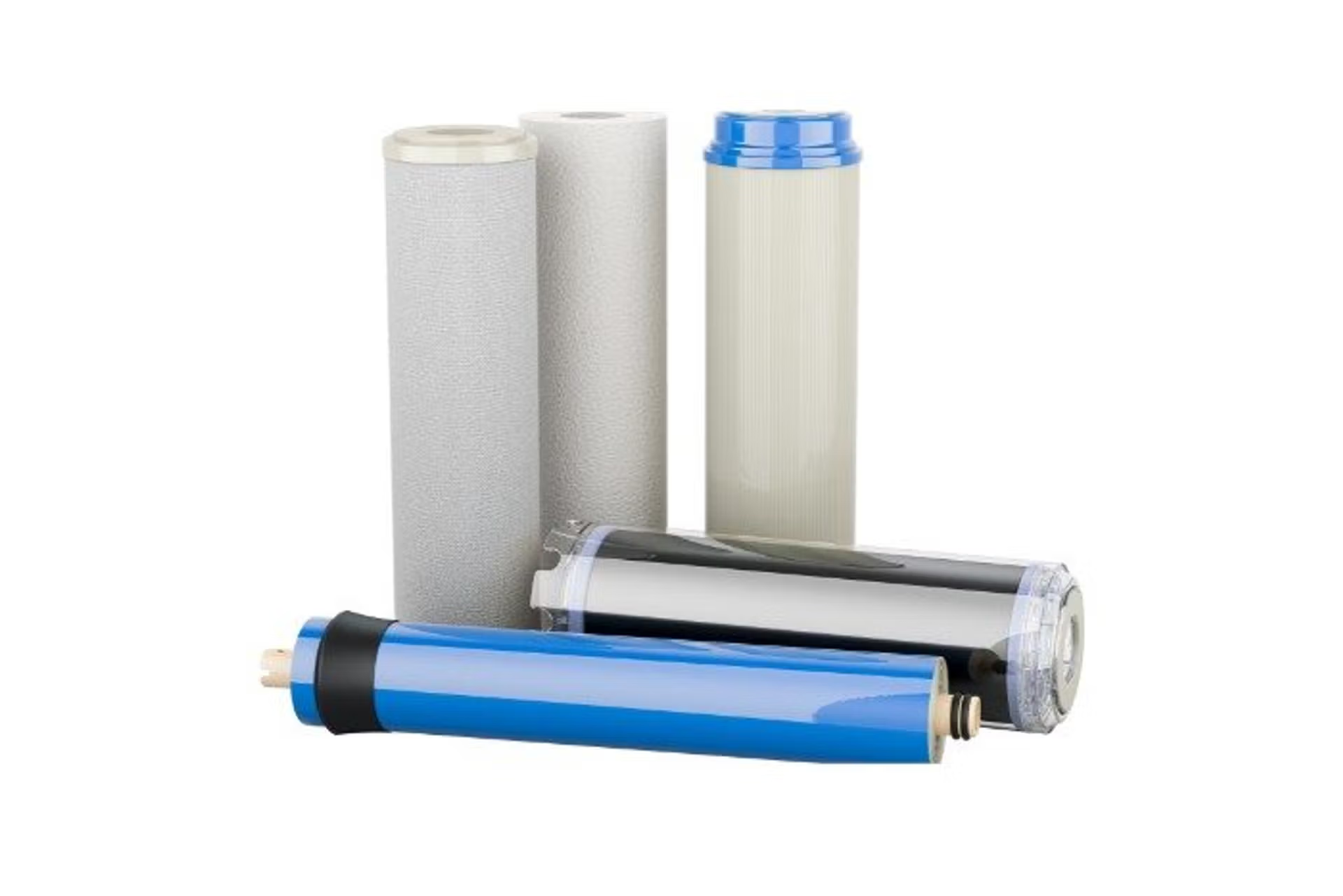
One of the most widely used filtration technologies is the activated carbon filters found in many residential systems.
Activated carbon works by attracting and trapping certain chemicals as water passes through the filter media. It’s particularly effective at reducing chlorine, unpleasant tastes, odors, and many organic compounds that can affect drinking water quality.
For homeowners connected to municipal water supplies, carbon filtration often creates an immediate improvement in how water smells and tastes.
Coffee and tea frequently develop richer flavors.
Ice cubes become cleaner tasting.
Even cooking benefits because water is a major ingredient in soups, pasta, vegetables, and countless recipes.
Carbon filtration doesn’t solve every water issue, but it’s often an excellent foundation for improving household water quality.
When reverse osmosis units Make Sense
Some homeowners require a higher level of drinking water purification.
That’s where reverse osmosis units come into the conversation.
Reverse osmosis uses a semi-permeable membrane that removes many dissolved substances from water, including certain salts, heavy metals, and other impurities depending on the specific system and local water conditions.
These systems are commonly installed beneath kitchen sinks because they’re designed primarily for drinking and cooking water rather than treating every gallon entering the home.
While reverse osmosis systems typically produce exceptionally clean drinking water, they’re not always necessary for every household.
Again, testing helps determine whether this technology is truly appropriate for your water rather than simply popular.
Looking Beyond the Kitchen Faucet
Many homeowners initially focus only on improving drinking water.
That’s understandable.
But water touches nearly every aspect of daily life.
You shower in it.
Wash clothes.
Run the dishwasher.
Fill the bathtub.
Brush your teeth.
Water your pets.
Clean your home.
Improving water quality throughout the house often creates benefits that extend well beyond what’s poured into a glass.
Soap rinses more effectively.
Fixtures stay cleaner longer.
Appliances experience less wear.
Daily routines simply become more enjoyable.
Why Some Homes Benefit from whole-house filtration systems
Instead of treating water at a single faucet, whole-house filtration systems process water as it enters the home.
This means every tap, shower, washing machine, dishwasher, and appliance receives filtered water.
These systems can reduce sediment, chlorine, unpleasant odors, and other water quality concerns before they circulate throughout the plumbing system.
For families wanting consistent water quality across the entire house, whole-house treatment often provides a more comprehensive solution.
Some homeowners even combine whole-house filtration with reverse osmosis at the kitchen sink, creating both broad household protection and highly purified drinking water.
The right combination depends entirely on the home’s water profile.
Better Water Protects More Than Your Health
People often associate water treatment solely with drinking safety, but that’s only part of the picture.
Water quality also affects expensive household equipment.
Mineral deposits reduce water heater efficiency.
Sediment can shorten appliance lifespan.
Chlorine may contribute to wear on certain plumbing components over time.
By reducing unnecessary stress on plumbing systems and appliances, appropriate water treatment often helps lower maintenance costs while extending equipment longevity.
Preventive improvements frequently prove less expensive than major repairs.
Small Changes Create Lasting Comfort
One of the interesting things about improving water quality is that the benefits rarely arrive as one dramatic transformation.
Instead, they’re scattered throughout everyday life.
Your shower feels more refreshing.
Glassware comes out cleaner.
Laundry feels softer.
Coffee tastes better.
Fixtures stay brighter.
The kitchen sink doesn’t smell quite as much like chlorine.
None of these moments seem extraordinary by themselves.
Together, however, they quietly improve how your home feels every single day.
Investing in Water You Can Feel Good About
Choosing a water filtration system isn’t about following trends or buying the most advanced technology available.
It’s about understanding your home’s unique water and selecting equipment that addresses real needs rather than assumptions.
Whether that means a simple carbon filter, a reverse osmosis drinking system, a whole-house filtration solution, or a combination of technologies, the goal remains the same: creating water that’s enjoyable to use, dependable for daily living, and better suited to your family’s lifestyle.
Good water often goes unnoticed because everything simply works the way it should.
Meals taste better.
Showers feel cleaner.
Appliances perform more efficiently.
Daily routines become just a little easier.
And perhaps that’s the greatest benefit of all. When water quietly supports your home instead of creating constant little frustrations, you stop thinking about it—and start enjoying the difference.