Water treatment can seem complicated when you first start looking into it. There are filters, softeners, purification systems, ultraviolet technology, and a whole collection of technical terms that can make a simple question—“How can I improve my water?”—feel surprisingly difficult.
The truth is, there isn’t one treatment method that’s perfect for every household. The right choice depends on your water source, what is actually present in the water, and what you want the system to accomplish. Once those things are clear, comparing different technologies becomes much easier.
Start With a Water Test
Before buying any equipment, it’s worth finding out what’s actually in your water. A basic water test can provide useful information about hardness, pH, sediment, disinfectants, and certain contaminants.
Municipal water and private well water can have very different characteristics. Even homes in the same neighborhood may experience differences because of plumbing, fixtures, or other local factors.
Testing prevents you from spending money on technology you don’t really need. After all, there’s little reason to install an advanced treatment system for a problem that isn’t present.
What UV Light Does
Ultraviolet treatment is quite different from ordinary filtration. UV light is used to inactivate microorganisms by exposing water to ultraviolet energy as it passes through the treatment chamber.
This can be particularly useful in homes where microbial concerns are relevant, especially with certain private water supplies. However, UV treatment doesn’t remove minerals, sediment, chemicals, or hardness from water.
That’s an important distinction. A UV system may be an excellent part of a treatment setup, but it isn’t a universal filter. Water usually needs to be properly filtered before reaching the UV chamber so that particles don’t interfere with the treatment process.
Why Whole-House Filtration Is Worth Considering
If the water-quality issue affects the entire home, treating only the kitchen faucet may not be enough.
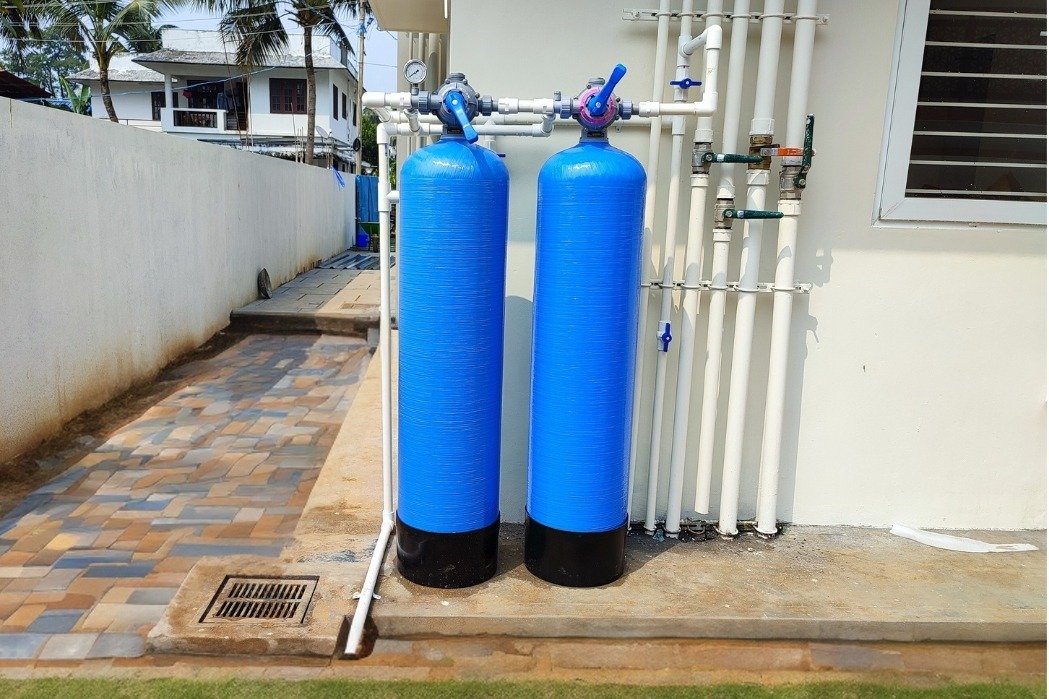
Whole House Filtration treats incoming water at a central point, allowing filtered water to travel throughout the plumbing system. Depending on the equipment, this can address concerns such as sediment, chlorine taste and odor, and certain other substances.
The biggest advantage is convenience. You don’t have to think about which faucet has filtered water because the treatment happens before water is distributed around the house.
Still, the type of filter matters. Whole-house systems can use different media and technologies, so it’s important to choose one based on your actual water conditions.
When Reverse Osmosis Makes Sense
For drinking and cooking water, a more intensive treatment approach may sometimes be appropriate.
Reverse Osmosis uses a semipermeable membrane to reduce many dissolved substances from water. It’s commonly installed as a point-of-use system, often beneath the kitchen sink.
RO can be useful when testing identifies specific dissolved contaminants that the system is designed to reduce. It can also produce water with a noticeably different taste because many dissolved minerals and other substances are removed.
However, reverse osmosis isn’t automatically the best choice for every household. Systems require filter and membrane replacement, and they may produce wastewater during operation. Understanding those trade-offs is part of making an informed decision.
Filtration and Purification Aren’t the Same
It’s easy to use the words “filtration” and “purification” as if they mean exactly the same thing. They don’t.
A filter generally removes or reduces substances through physical, chemical, or adsorption processes. Purification can refer to treatment methods intended to address microorganisms or other specific concerns.
That’s why a well-designed water system may combine multiple technologies. One stage can remove sediment, another can improve taste, and another can address microbial concerns.
The goal isn’t to use every available technology. It’s to create a treatment chain that makes sense for the water entering your home.
Think About the Whole Household
When choosing a system, consider how your family actually uses water.
A household with several bathrooms, frequent laundry, and high daily consumption will have different requirements from a smaller home. Flow rate matters, especially when multiple fixtures are running at once.
A system that’s too small may restrict water flow or require more frequent maintenance. One that’s unnecessarily large may cost more without providing a meaningful benefit.
Ask about capacity, expected flow rate, replacement schedules, installation requirements, and operating costs before making a decision.
Maintenance Is Part of the Deal
Water treatment equipment isn’t completely hands-off. Filters need replacement, UV lamps have service requirements, and RO membranes eventually need changing.
It’s easy to forget about these things because treatment equipment usually works quietly in the background. But neglected maintenance can reduce performance.
Keep a simple maintenance schedule. Mark filter replacement dates on your calendar and pay attention to changes in water taste, pressure, appearance, or odor.
If something suddenly seems different, investigate it rather than assuming the system is working normally.
Don’t Be Distracted by Too Many Features
Modern treatment systems can come with smart controls, monitoring screens, automatic settings, and plenty of impressive features. Some are genuinely useful. Others may simply make the product sound more advanced.
Focus on performance first.
Ask what the system is designed to reduce, whether the claims are supported by reliable testing or certification, and what ongoing maintenance will cost.
A straightforward system that solves your actual water problem is usually more valuable than an expensive system packed with features you’ll never use.
Making a Confident Choice
Good water treatment starts with information, not guesswork.
Test your water, identify the main concerns, and then compare technologies that are designed for those specific issues. UV treatment, whole-house filtration, and reverse osmosis all have useful roles, but they solve different problems.
The best system isn’t necessarily the biggest or most sophisticated one. It’s the one that fits your home’s water, your family’s needs, and your willingness to maintain it.
When you choose technology for a genuine reason rather than simply following the latest trend, water treatment becomes much less complicated. It becomes what it should be: a practical home improvement that quietly makes everyday life a little easier.