Water is one of those things we tend to notice only when something goes wrong. A strange taste, mineral buildup, unreliable equipment, or inconsistent results in a commercial process can suddenly make water quality a much bigger conversation.
For many homes and businesses, ordinary filtration may be enough. But some applications require much more control over dissolved minerals and other substances. Laboratories, manufacturing facilities, medical environments, food and beverage operations, and specialized commercial processes may all have reasons to demand water with very specific characteristics.
The challenge is figuring out what level of treatment is actually necessary. More treatment isn’t automatically better. The right treatment is the treatment that matches the water and the job it needs to do.
Start With a Clear Picture of Your Water
Before choosing equipment, test the incoming water.
A water analysis can reveal hardness, dissolved solids, chlorine, sediment, iron, sulfur, and other characteristics. For commercial users, additional testing may be appropriate depending on the application.
This information gives you a starting point. Without it, choosing a treatment system can become a guessing game.
A homeowner may only need improved taste and odor. A restaurant might need protection against hardness while maintaining a particular water profile for coffee or beverages. A manufacturer could have much tighter requirements.
Same basic resource. Very different needs.
Where Deionization Fits In
When very low levels of dissolved ions are required, deionization systems can be an important part of the treatment process.
Deionization uses ion-exchange technology to remove charged dissolved ions from water. The result can be water with very low ionic content, depending on the system design and incoming water quality.
This type of treatment is commonly associated with specialized applications where ordinary filtration isn’t enough.
It’s worth noting that deionization and reverse osmosis aren’t identical technologies. They solve different problems and are sometimes used together. RO can reduce a broad range of dissolved substances and help lower the load placed on deionization equipment.
The best setup depends on the desired water quality.
Not Every Application Needs Extremely Pure Water
There’s a tendency in water treatment to assume that purer always means better.
That’s not necessarily true.
Drinking water, for example, doesn’t need to have every dissolved mineral removed. In fact, the ideal treatment approach for drinking water can be very different from the requirements of a laboratory or manufacturing process.
The goal should be appropriate water quality, not simply the lowest possible number on a meter.
This distinction can save money, too. Installing advanced equipment where simple filtration would have been sufficient adds unnecessary costs and maintenance.
Understanding “99.99% Pure Water”
You may come across claims describing 99.99% pure water on demand when researching advanced treatment systems.
That sounds impressive, but percentages should always be viewed in context.
What does “pure” mean in that particular claim? Which substances are being reduced? How was performance measured? What were the incoming-water conditions? How much water can the system produce, and for how long?
These questions matter because water purity isn’t one single measurement.
A system can perform extremely well for one category of substances while having limitations with another. Understanding the actual specification is far more useful than focusing only on a large percentage.
Reverse Osmosis and Deionization Can Work Together
Reverse osmosis and deionization are often discussed separately, but they can complement each other.
RO membranes can remove many dissolved substances and significantly reduce the total dissolved load entering a downstream deionization stage. This can help the deionization equipment operate more efficiently in some applications.
The exact arrangement depends on the source water and desired quality.
Pretreatment may also be necessary. Sediment, hardness, chlorine, and other characteristics can affect RO membranes and other treatment components.
A well-designed treatment train considers the entire process, not just the final filter.
Why Commercial Users Need Consistency
For a business, water quality isn’t only about what comes out of a faucet.
It may be part of a production process, a recipe, a cleaning procedure, or the operation of expensive equipment. If water characteristics change significantly, the results can change too.
A manufacturing facility may need consistent process water. A laboratory may require tightly controlled conditions. A beverage company may depend on water chemistry to maintain the same product profile.
Consistency is often the real goal behind advanced treatment.
Equipment Protection Is Another Consideration
Water chemistry can affect equipment in ways that aren’t immediately obvious.
Hardness can contribute to scale. Certain dissolved substances may cause corrosion or interfere with sensitive processes. High mineral content can also affect equipment designed to operate with lower-conductivity water.
Appropriate treatment can help manage these concerns, but it should be combined with regular equipment maintenance.
Water treatment isn’t a substitute for cleaning, inspections, calibration, or replacing worn components. It’s one piece of a larger maintenance strategy.
Choosing Water Filtration Systems
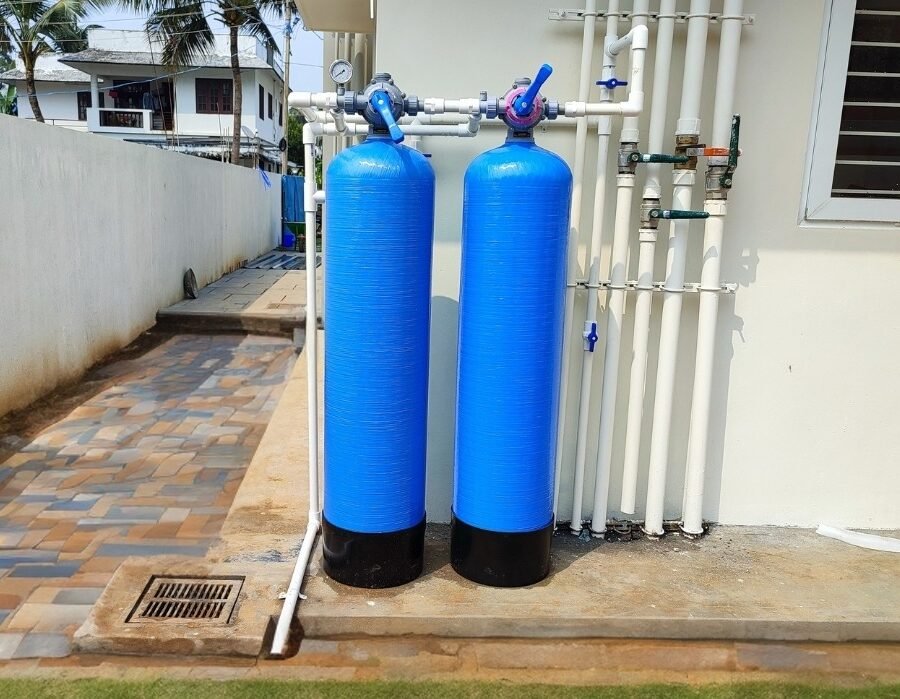
Not every water problem requires RO or deionization. In many situations, water filtration systems are the sensible starting point.
Filtration can address specific issues such as sediment, chlorine taste and odor, and other substances depending on the filter media and system design.
The important thing is matching the technology to the contaminant.
Activated carbon, sediment filtration, softening, reverse osmosis, deionization, and other treatment methods each have different strengths. A professional water analysis can help determine which combination makes sense.
Sometimes simple really is better.
Pay Attention to Flow and Capacity
A treatment system must produce enough water for the application.
A small office and a busy manufacturing facility obviously have very different demands. But even within one business, average usage and peak demand can be dramatically different.
System sizing should account for production schedules, operating hours, storage capacity, flow rates, and future growth.
An undersized system can become a bottleneck. An oversized one may cost more to purchase and operate than necessary.
Good design is about finding the right balance.
Storage and Distribution Matter Too
Producing high-quality water is only part of the job.
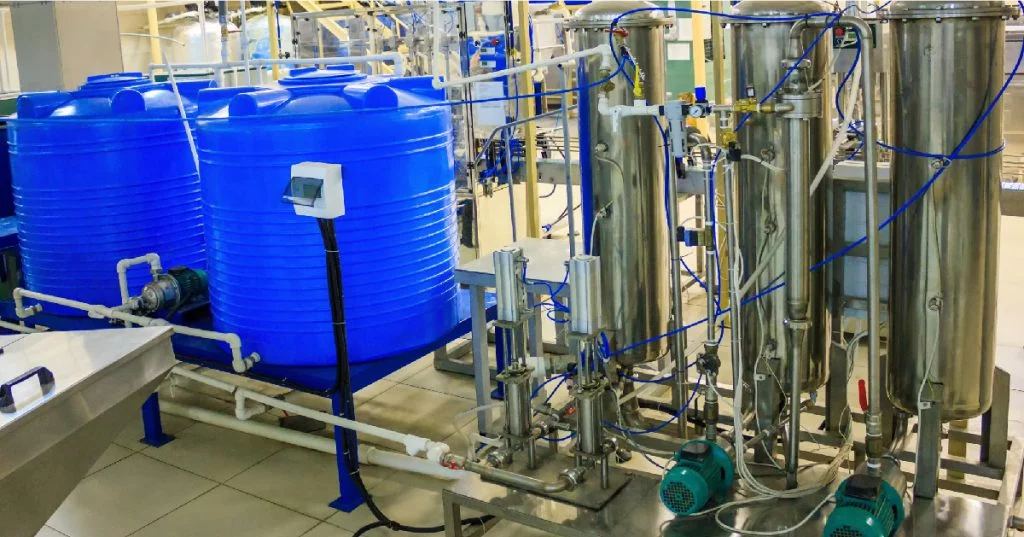
The treated water may need to be stored in a tank and delivered through pumps, pipes, valves, and other components. Every part of that system should be suitable for the intended water quality and application.
Poor storage or distribution practices can undermine an otherwise excellent treatment process.
For sensitive applications, system design should therefore extend beyond the treatment equipment itself.
Maintenance Keeps the System Working
Advanced water treatment equipment needs regular attention.
Filters have service lives. RO membranes need monitoring and eventual cleaning or replacement. Deionization media becomes exhausted and must be regenerated or replaced. Pumps, valves, tanks, and monitoring instruments may also require maintenance.
Skipping service can affect water quality and increase operating costs.
Before installation, understand the maintenance schedule and ongoing expenses. Ask how performance is monitored and how you will know when treatment components need attention.
It’s much easier to budget for maintenance than to budget for an unexpected production problem.
Don’t Let Marketing Make the Decision
Water-treatment technology can sound complicated, and marketing language can make it even more confusing.
Look beyond phrases such as “ultra-pure,” “advanced purification,” or “maximum filtration.”
Ask practical questions instead.
What does the system remove? What is the expected treated-water quality? What is the production capacity? What pretreatment is needed? How often are consumables replaced? What are the operating costs?
Clear answers are much more valuable than impressive terminology.
The Bottom Line
Water treatment becomes especially important when water quality affects a product, process, or piece of sensitive equipment.
Deionization can provide extremely low-ion water for appropriate applications, while reverse osmosis and filtration can play important supporting or standalone roles. The best solution depends on the source water and the quality requirements of the final application.
Start with testing. Understand the actual requirement. Then choose technology based on performance rather than hype.
When the system is properly designed, maintained, and monitored, high-quality water becomes dependable rather than something you have to worry about every day. And for a busy business or specialized operation, that kind of reliability is worth far more than a complicated equipment list.