Water plays a surprisingly important role in the day-to-day running of a business. In a restaurant, it affects cooking, beverages, cleaning, and equipment. In a hotel, guests expect it to look, smell, and taste right. Manufacturing facilities may depend on water for processing, rinsing, cooling, or production.
When water contains unwanted dissolved substances, ordinary filtration may not always be enough. That’s where reverse osmosis becomes worth considering. It can provide a more extensive level of treatment, but choosing the right system requires more thought than simply buying the largest unit available.
The best approach starts with understanding the water, the business, and what the treated water actually needs to accomplish.
Why Commercial Water Treatment Is Different
A household might use water at several points throughout the day, but commercial properties can have several fixtures and processes drawing water at the same time.
A busy restaurant, for example, may have dishwashers, ice machines, coffee equipment, sinks, and cooking stations operating during the same period. A manufacturing facility could require water continuously as part of a production process.
This is why commercial reverse osmosis systems are generally designed around specific flow rates, operating conditions, and water-quality requirements.
The goal isn’t simply to produce highly treated water. It’s to provide the right amount of appropriately treated water when the business needs it.
Understanding Reverse Osmosis
Reverse osmosis, often called RO, uses a semipermeable membrane to reduce many dissolved substances from water. Water is pushed through the membrane under pressure, while many dissolved contaminants are separated from the treated water stream.
It’s a powerful technology, but it isn’t magic.
The performance of an RO system depends on incoming water quality, pressure, temperature, membrane condition, pretreatment, and system design.
That’s why two businesses with seemingly similar water needs might require different configurations.
Start With Water Testing
Before selecting an RO system, testing the incoming water is one of the smartest steps a business can take.
A water analysis may examine hardness, pH, total dissolved solids, iron, chlorine, sediment, and other characteristics depending on the application.
This information matters because untreated water can affect RO membranes. Hardness and certain other substances may contribute to scaling or fouling, reducing membrane performance over time.
Testing allows system designers to determine what pretreatment is needed and how the RO system should be configured.
It’s much better than discovering six months later that the equipment was never properly matched to the water.
The Role of Water Purification
The term water purification can mean different things depending on the application. For some businesses, the goal may be better-tasting drinking water. For others, water may need to meet much tighter process specifications.
RO can be part of a purification strategy, but it doesn’t necessarily have to be the only treatment step.
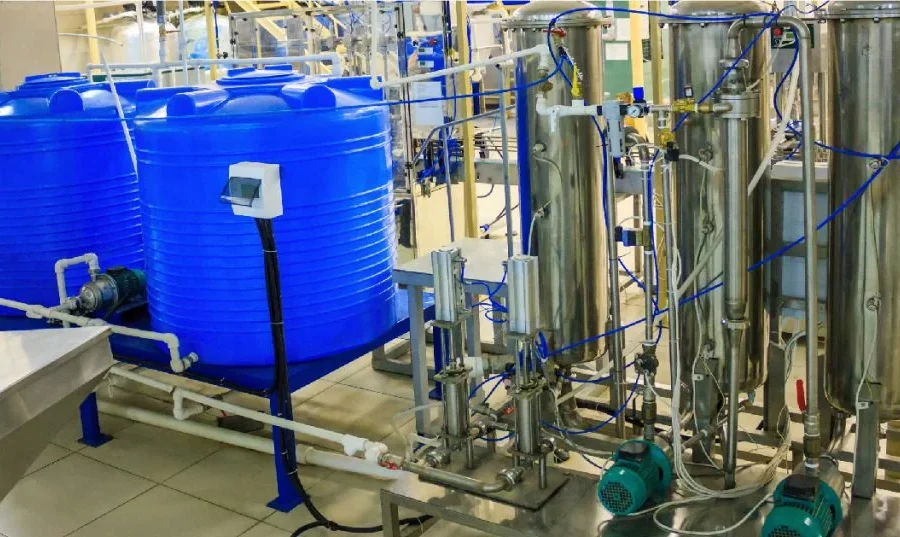
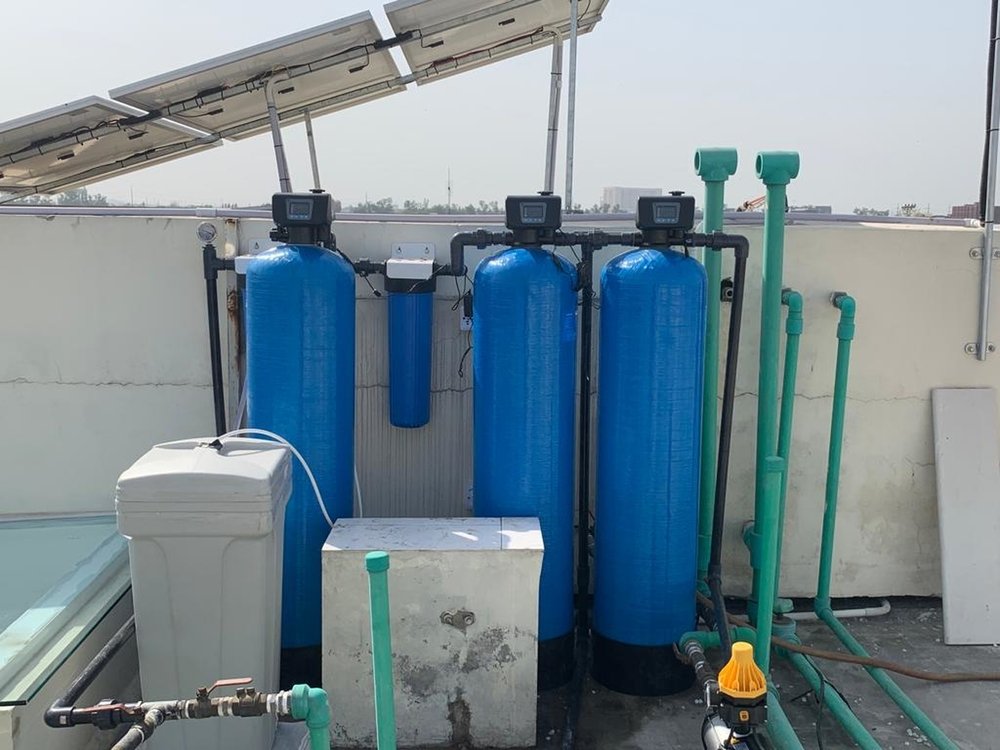
A commercial system might include sediment filtration, carbon filtration, water softening, RO, ultraviolet treatment, or other technologies. Each stage has a particular purpose.
Pretreatment can protect the RO membrane, while post-treatment may adjust the final water for a specific application.
The important thing is to build the treatment process around the actual requirements rather than adding technology simply because it sounds advanced.
Why Pretreatment Matters
RO membranes work best when the incoming water has been properly prepared.
Sediment can physically foul a membrane. Chlorine may damage certain membrane materials. Hardness can contribute to scaling.
Pretreatment helps address these issues before water reaches the RO membrane.
For example, a sediment filter may capture suspended particles, while carbon filtration can reduce chlorine and certain organic compounds. A softening stage may be appropriate when hardness is a significant concern.
The exact combination depends on the water test and the membrane technology being used.
Flow Rate Is a Big Deal
Commercial businesses can’t always wait around for water to slowly trickle through a treatment system.
Flow requirements need careful consideration.
A restaurant may need treated water during a busy service period. A hotel may have unpredictable peaks depending on occupancy. A production facility may require a steady supply throughout working hours.
System capacity should therefore be based on actual demand, including peak usage.
Storage tanks can sometimes help meet short-term demand, allowing the RO system to operate more steadily instead of being sized solely for the highest possible momentary flow.
Good system design balances capacity, efficiency, available space, and cost.
Protecting the Membrane and Equipment
RO membranes aren’t indestructible. Their performance can decline when they’re exposed to excessive fouling, scaling, or unsuitable water conditions.
Regular monitoring can help identify problems early.
Operators should pay attention to pressure, flow, treated-water quality, and membrane performance. If the system suddenly produces less water or treated-water quality changes, it may indicate fouling, scaling, or another issue.
Routine maintenance is far less disruptive than waiting for a complete system failure.
What Does Water Purity Really Mean?
Businesses sometimes use the phrase water purity as though it means the same thing everywhere. In reality, the desired level of purity depends on the intended use.
A restaurant making coffee may have different requirements from a laboratory or manufacturing process.
More purified water isn’t automatically better for every application. Excessive treatment can increase energy use, wastewater production, and operating costs without providing a useful benefit.
The sensible question is: what level of treatment does this application actually require?
That answer should guide the system design.
Managing RO Wastewater and Operating Costs
One consideration with reverse osmosis is that the process produces a concentrate or reject stream. The amount varies by system design and operating conditions.
Commercial facilities should understand how this wastewater will be handled before installation.
Energy consumption is another factor. RO requires pressure to move water through the membrane, so system efficiency matters.
Modern equipment can be designed to improve recovery and reduce unnecessary waste, but performance depends on the specific application and incoming water conditions.
A system should be evaluated by its total operating cost—not just its purchase price.
Maintenance Should Never Be an Afterthought
Commercial RO equipment needs regular care.
Filters must be replaced, membranes may eventually require cleaning or replacement, and pumps, valves, controls, and storage components should be inspected.
A written maintenance schedule makes things easier, particularly when several employees share responsibility for equipment.
Keeping records of filter changes, membrane cleaning, water testing, and service visits can also help identify gradual performance changes.
It’s one of those boring jobs that becomes very useful when something goes wrong.
Choosing a System That Fits the Business
The best RO system isn’t necessarily the biggest or most expensive one. It’s the one designed around the facility’s water chemistry, usage pattern, required treatment level, available space, and long-term operating budget.
Professional system design can be particularly valuable for larger facilities or applications where water quality directly affects production.
Start with testing. Define the treatment goal. Calculate demand. Plan pretreatment and maintenance. Then choose equipment accordingly.
That’s a much more reliable path than buying equipment first and figuring everything else out later.
A Smarter Approach to Commercial Water Treatment
Reverse osmosis can be an excellent tool for businesses that need more extensive water treatment, but its success depends heavily on proper planning.
Good testing, appropriate pretreatment, correct sizing, routine maintenance, and realistic expectations all matter.
When those pieces come together, treated water can support equipment, production, customer experiences, and everyday business operations without becoming a constant headache.
In the end, effective water treatment isn’t about chasing the purest possible water. It’s about producing water that’s right for the job, consistently and efficiently. And for a busy commercial operation, that kind of reliability is worth a lot.