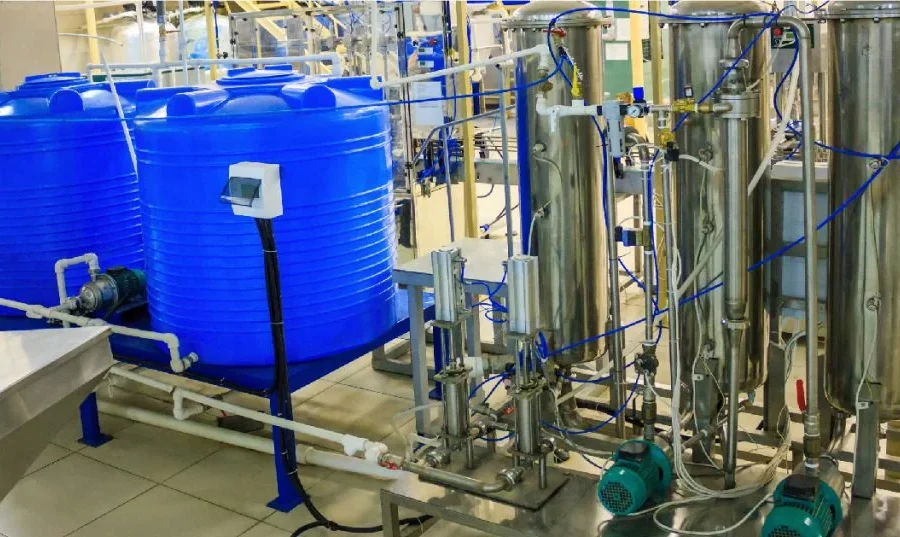

Water is one of those resources that quietly keeps a business moving. It doesn’t usually appear in board meetings or marketing plans, yet it supports everything from brewing coffee in the office to powering manufacturing equipment and keeping restaurants, hotels, and healthcare facilities running smoothly.
Most companies only start paying attention when something goes wrong. A machine breaks down because of mineral buildup. Customers notice cloudy ice cubes. Utility costs begin climbing without an obvious explanation. Suddenly, water becomes impossible to ignore.
The reality is that water influences far more than people realize. It affects equipment performance, maintenance budgets, employee comfort, customer satisfaction, and even the overall efficiency of daily operations. That’s why more organizations are beginning to treat water management as a long-term business strategy rather than a simple maintenance task.
Water Is Part of Every Business Day
Think about how often water is used throughout a typical workday.
Restaurants rely on it to prepare meals, wash dishes, and serve beverages. Hotels use thousands of gallons for guest rooms, laundry services, kitchens, and recreational areas. Manufacturing facilities depend on stable water quality for production, while offices need clean water for employees and visitors.
Even businesses that don’t seem water-intensive still use it continuously in restrooms, coffee stations, cleaning routines, and heating or cooling systems.
Because water supports so many everyday activities, small quality issues can gradually create larger operational challenges.
Hidden Costs Add Up Faster Than Expected
Poor water conditions rarely create immediate disasters. Instead, they quietly increase operating expenses over time.
Minerals accumulate inside pipes, boilers, dishwashers, and water heaters. Coffee machines require more frequent maintenance. Scale reduces heating efficiency, causing equipment to consume more energy than necessary.
These gradual changes often go unnoticed because they develop slowly. Yet when businesses compare maintenance records over several years, water quality frequently turns out to be an important factor.
Preventing those issues usually costs less than dealing with repeated repairs or premature equipment replacement.
Every Business Needs a Different Approach
One of the biggest misconceptions about water treatment is that every facility requires the same type of equipment.
In reality, every business has unique priorities.
A bakery may focus on consistent recipe quality. A medical facility prioritizes sanitation. A hotel wants spotless fixtures and satisfied guests, while a manufacturing plant often depends on precise water conditions to protect production equipment.
That’s why many organizations invest in commercial systems designed around their specific industry and operational requirements instead of relying on generic solutions.
Tailored equipment typically performs better because it’s solving actual problems rather than hypothetical ones.
Choosing Reliable Equipment Matters
When businesses invest in infrastructure, reliability often matters just as much as performance.
Water treatment equipment operates day after day with very little attention, so consistent operation becomes essential. Downtime can interrupt production schedules, delay customer service, or increase maintenance expenses.
For that reason, many organizations look toward established manufacturers such as Pentair , known for producing a wide range of commercial water treatment technologies. While no single brand is perfect for every application, choosing equipment supported by proven engineering and dependable service networks often provides valuable peace of mind.
Quality equipment isn’t simply about today’s performance. It’s about confidence several years down the road.
Better Water Improves Customer Experiences
Customers may never see your filtration equipment, but they certainly experience its results.
Fresh-tasting coffee, clear ice cubes, sparkling glassware, and consistently prepared food all contribute to positive impressions. Hotels benefit from cleaner showers and brighter linens, while restaurants appreciate beverages that taste exactly as intended.
Even office environments gain from providing employees with better drinking water and improved workplace comfort.
These improvements don’t always attract attention individually, yet together they strengthen the overall experience customers associate with your business.
Sometimes the smallest operational details leave the strongest lasting impressions.
Understanding Long-Term Value
It’s easy to focus on purchase price when evaluating new equipment.
However, water improvements often create value in ways that extend far beyond the initial investment.
Lower maintenance costs, reduced equipment downtime, longer appliance lifespan, improved energy efficiency, and greater operational consistency all contribute to measurable savings over time.
Instead of viewing water treatment as another expense, many companies now recognize it as preventive asset management.
Protecting expensive equipment almost always costs less than replacing it unexpectedly.
Practical Solutions Over Complicated Technology
Modern water treatment doesn’t have to be overly complicated.
Some businesses only require sediment removal. Others benefit from carbon filtration, water softening, reverse osmosis, ultraviolet purification, or customized treatment combinations based on their specific water conditions.
The most effective water solutions aren’t necessarily the most advanced or expensive. They’re the ones selected after understanding local water characteristics and matching technology to actual operational needs.
That practical approach usually delivers better performance while keeping maintenance manageable for facility managers.
Why Testing Comes Before Equipment
One mistake businesses occasionally make is purchasing treatment equipment before understanding the water they’re working with.
Professional water analysis provides valuable information about hardness, sediment, dissolved minerals, chlorine, iron, and other characteristics that influence treatment decisions.
Armed with accurate data, organizations can avoid spending money on systems designed to solve problems that don’t actually exist.
Better information almost always leads to better investments.
Water Quietly Supports Business Success
Water isn’t usually the first thing customers think about when they visit your business, and that’s exactly how it should be.
Behind the scenes, though, it plays an important role in protecting equipment, supporting employees, maintaining product quality, and creating positive customer experiences. From restaurants and hotels to manufacturing facilities and office buildings, dependable water helps businesses operate more efficiently every single day.
The organizations that recognize this often discover that improving water isn’t merely about treatment technology. It’s about reducing unnecessary costs, protecting valuable assets, and building a more reliable operation for the future.
In the end, successful businesses are often built on attention to details that customers never see. Water happens to be one of those details—quietly supporting every day, every shift, and every opportunity to deliver excellent results.